Best Gymnastics Clubs in Gympie
Compare trusted Gympie gymnastics clubs for recreational classes, competitive squads, KinderGym and holiday programs, then call the right one direct.
Gymnastics Clubs in Gympie
Gymnastics Clubs in Other Queensland Cities
About gymnastics clubs in Gympie
Compare 1 rated gymnastics club business in Gympie, Queensland.
Frequently Asked Questions About Gymnastics Clubs in Gympie
Children in Gympie can begin gymnastics from as young as eighteen months to two years old through KinderGym or preschool movement programmes. These sessions are designed for toddlers and young children, often with a parent or carer joining in, and focus on developing fundamental movement skills, balance, and coordination in a safe, playful environment.
From around three or four years old, children can usually move into structured preschool gymnastics classes on their own. Recreational classes for school-aged children typically start from five or six years old.
Teenagers and adults can also find suitable programmes at many clubs. Starting early is not essential for enjoyment or even for a future competitive pathway, so there is no need to rush enrolment before your child feels ready.
Start by thinking about what your child actually needs right now. A toddler exploring movement for the first time has very different needs from a ten-year-old showing strong potential for a competitive squad.
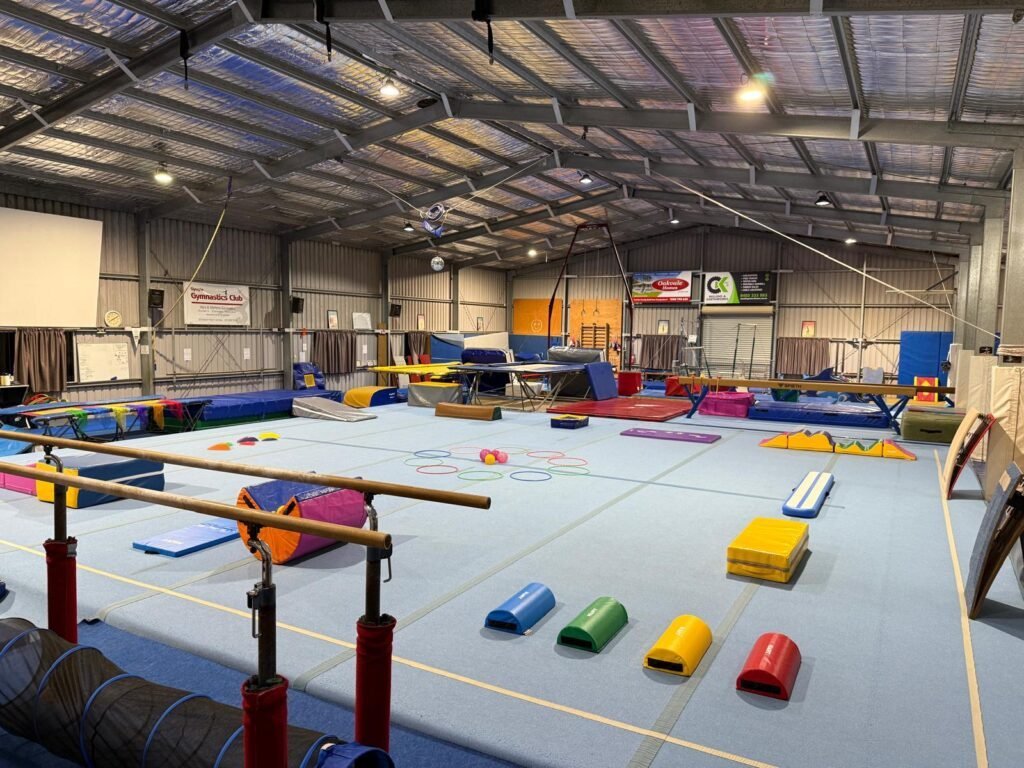
On this directory you can compare Gympie gymnastics clubs by their ratings, the specific programmes they run, the age groups they cater for, and the apparatus and facilities they have available. You can also see at a glance which clubs offer KinderGym, holiday camps, birthday parties, or competitive squads in disciplines such as women's artistic, men's artistic, rhythmic, trampoline, or acrobatics.
Checking whether a club is affiliated with Gymnastics Australia is worthwhile too, as affiliation covers coach accreditation, insurance, and safe-sport policies. If your child eventually wants to compete, consider how far you are willing to travel for squad training, as higher-level competitions often require access to specialist facilities.
Recreational gymnastics is about participation, fitness, and fun. Classes run during school terms and are open to a broad range of ages and abilities, with no obligation to compete.
Children learn foundational skills on apparatus such as the beam, bars, vault, and floor, progressing at their own pace. Competitive gymnastics involves joining a squad, training several times a week, and working toward regional, state, and national competitions run through Gymnastics Australia's competition calendar.
Disciplines include women's and men's artistic gymnastics, rhythmic gymnastics, trampoline, tumbling, and acrobatics. The commitment in time, travel, and cost is considerably greater for competitive pathways.
Many children begin in a recreational class and are later invited by coaches to trial for a squad if they show aptitude and enthusiasm. There is no pressure to follow a competitive route, and plenty of gymnasts enjoy recreational classes well into their teens.
Fees vary between clubs and depend on the type of programme your child joins, so it is not possible to give a single figure that applies across Gympie. Recreational classes are usually charged on a school-term basis, with the fee covering a set number of weekly sessions.
Some clubs also offer casual attendance options. Most clubs charge a separate annual registration fee that covers Gymnastics Australia insurance where the club is affiliated.
Competitive squad fees work differently, reflecting the greater number of training hours, coaching resources, and competition levies involved. Families should also factor in the cost of a leotard and, for competitive gymnasts, competition entry fees and travel.
The listings on this directory let you view and compare what each Gympie club includes in its fees so you can make an informed decision based on your family's budget and the programme you are considering.
Most first classes begin with a warm-up that gets children moving and helps them settle into the gym environment. Coaches will introduce basic skills suited to the age group, which might include forward rolls, balancing on a low beam, jumping on a trampoline or springboard, or simple floor sequences.
Classes are structured to be encouraging and age-appropriate, so children are rarely pushed beyond what they are physically and emotionally ready for. Your child will likely work in a small group and rotate through different stations or apparatus during the session.
Wearing fitted, comfortable clothing and bare feet or gymnastics shoes is standard, and long hair should be tied back securely. For very young children in KinderGym sessions, a parent or carer usually stays and participates.
After the first class many children are eager to return, but it is perfectly normal for some to need a session or two to feel fully comfortable in a new setting.